





KOSEI Publishing Co. Ltd. Bookmark
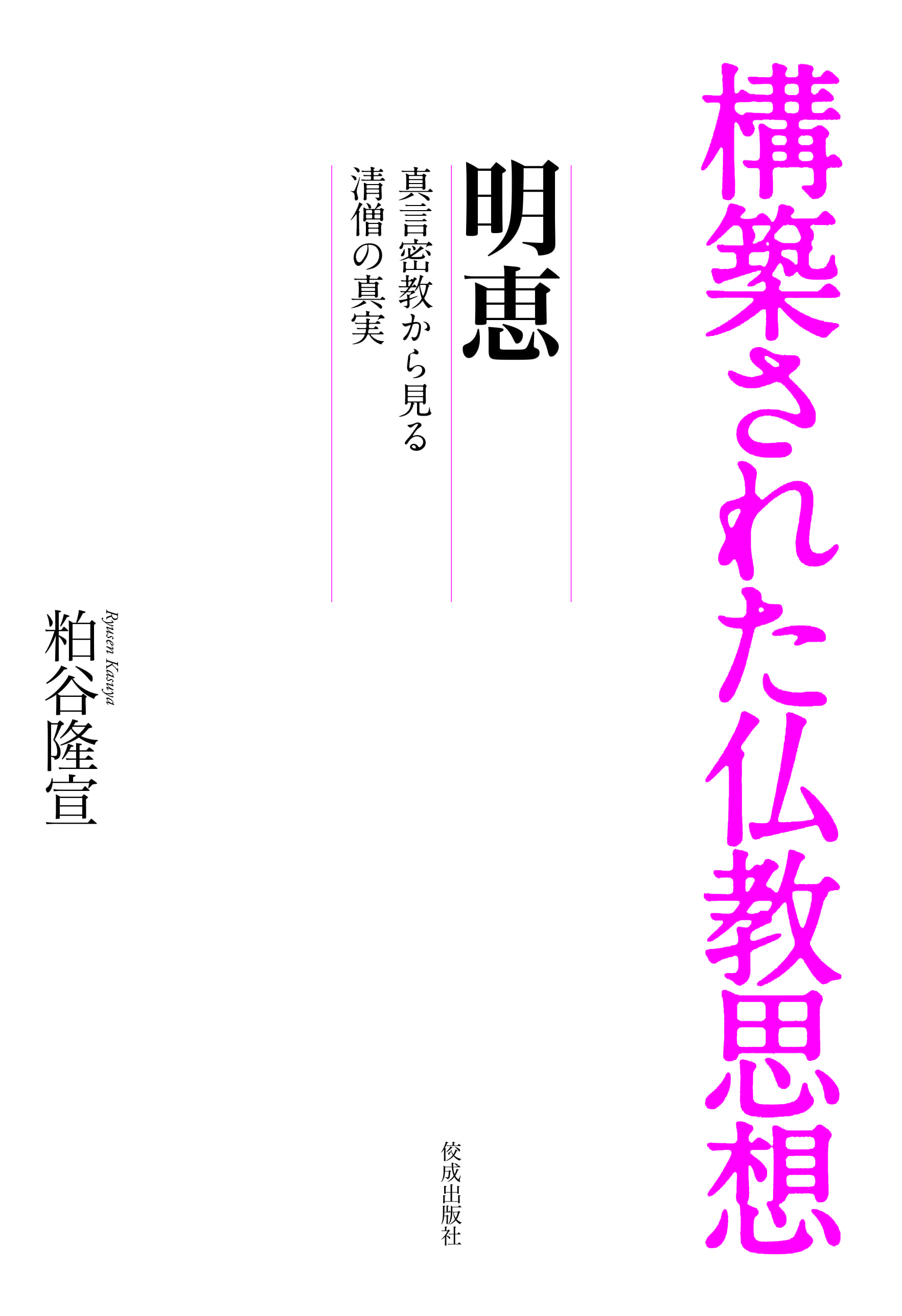
Constructed Buddhist Thought: Myōe
Information will be available after you log in. Please create an account.
Rights Information
Other Special Conditions
Abstract
Myōe (1173-1232) was the founder of Kōzan-ji Temple in Yamashiro Province and the restorer of the Kegon sect. At the age of 16, he received precepts at Tōdai-ji Temple, studied various Esoteric and Exoteric Buddhist teachings from various scholarly monks in the Kinai region, and in 1206 (Ken'ei 1), he was granted Mount Togao by Emperor Go-Toba, where he founded Kōzan-ji Temple and established it as a center for the flourishing of the Kegon sect. He valued the precepts, opposed the rise of followers of the Nembutsu, and worked to revive the various Esoteric and Exoteric Buddhist sects, writing "Zaijarin" (a treatise criticizing Hōnen's exclusive Nembutsu practice for denying the Bodhisattva mind). He planned to travel to India several times, but was unable to do so due to illness. During the Jōkyū War (1221), he sheltered defeated soldiers and founded Zenmyō-ji Temple, a nunnery for the wives of fallen samurai. In his last will and testament, he stated, "People should uphold the seven characters 'Arubekiyouwa' (meaning 'as it should be')," indicating his commitment to upholding precepts. He also left behind a "Dream Journal," a record of his nightly dreams, which greatly influenced Hayao Kawai, a leading figure in Jungian psychology. Eisai, the founder of the Rinzai school of Zen Buddhism, is also famous for planting tea seeds, which were introduced from Song China, on Mount Togao and cultivating them. He also left behind many waka poems. This book can be considered an introductory text to understanding the life and thought of this renowned monk who left a lasting impact on Japanese culture.
Author’s Information
Born in Hitachi City, Ibaraki Prefecture in 1972. Completed doctoral studies at Taisho University Graduate School. Currently, he is an associate professor in the Faculty of Buddhist Studies at Taisho University and a researcher at the Institute of Buddhist Studies, Shingon-shu Buzan-ha Comprehensive Research Institute. He is also the chief priest of Mansenji Temple. His specialty is Japanese medieval Buddhism, particularly the thought and rituals of Myōe Shōnin. Focusing on its relationship with Shingon Esoteric Buddhism, he explores the development of Myōe's thought through the analysis of writings and ancient manuscripts of Shingon Buddhist monks of the time. He also engages in missionary and educational activities as a special missionary from the head temple, visiting local temples and conducting training programs.
His major publications include "A Reconsideration of Myōe's 'Strict' Thought: Focusing on Materials Formerly Owned by Mr. Kyōdō Ishii" (Journal of Esoteric Buddhism Studies, No. 56, 2024) and "On Myōe's Healing Rituals" (Toyama Gakuho, No. 66, 2023). His co-authored works include Jun'o Tanaka (ed.), "The World of Shakyamuni Worship: Tracing from Japan to India" (Nombre Publishing, 2016), and Hisao Takahashi, Hideaki Kimura, Keiya Noguchi, and Nobuo Ōtsuka (eds.), "Early Esoteric Buddhism: Thought, Belief, and Culture" (Shunjusha, 2013), among others.
| Series/Label | --- |
|---|---|
| Released Date | Dec 2025 |
| Price | ¥1,600 |
| Size | 128mm×182mm |
| Total Page Number | 160 pages |
| Color Page Number | --- |
| ISBN | 9784333029471 |
| Genre | Nonfiction / Humanities > Culture/Religion |
| Visualization experience | NO |