





KOSEI Publishing Co. Ltd. Bookmark
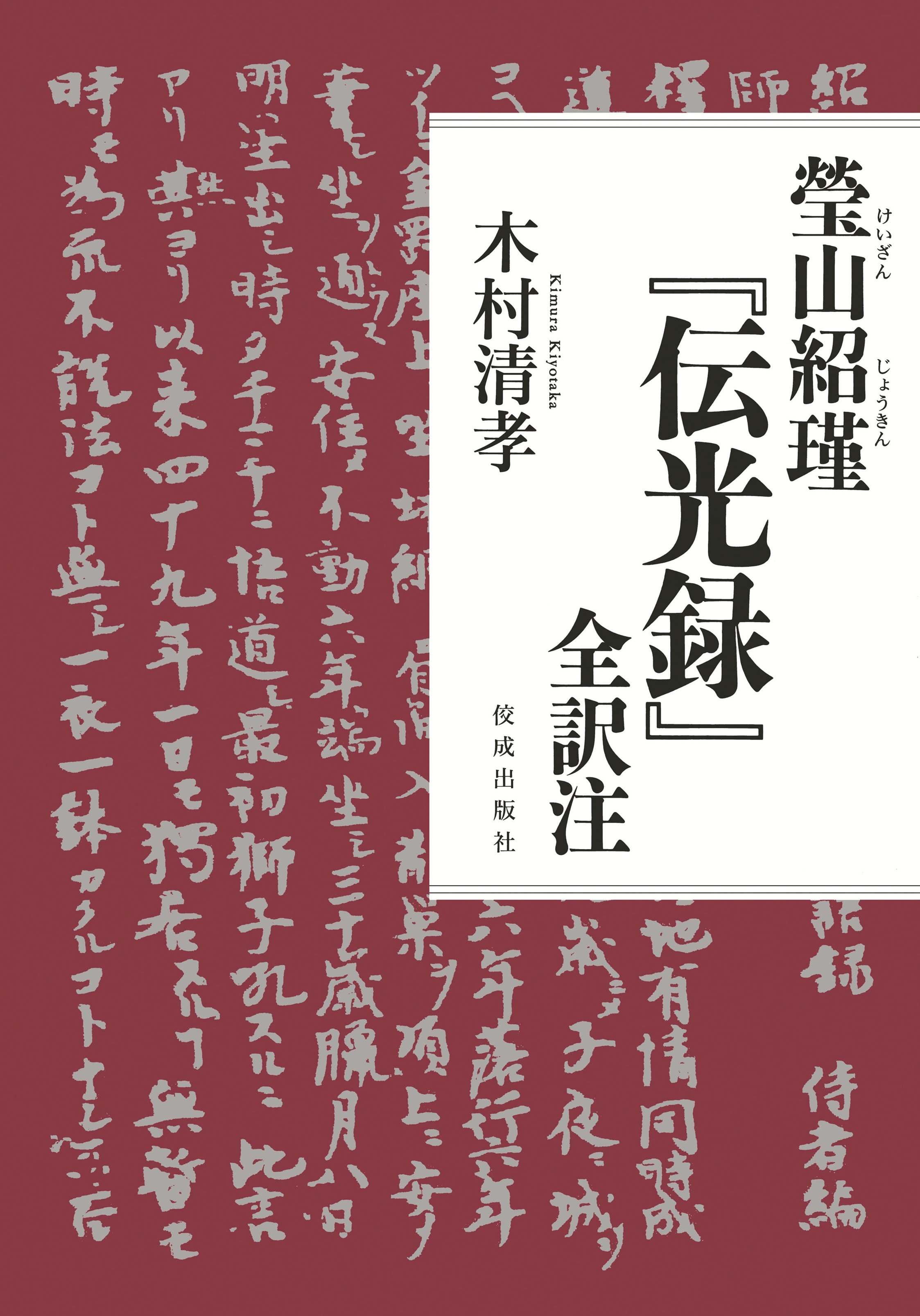
Keizan Jōkin's complete translation and commentary of "Denkōroku"
Information will be available after you log in. Please create an account.
Rights Information
Other Special Conditions
Abstract
This book is a modern Japanese translation and commentary of "Denkoroku," the main work of Zen Master Keizan Jokin (1264-1325, the fourth-generation Dharma descendant of Zen Master Dogen, the founder of the Japanese Soto Zen sect, and the founder of Sojiji Temple in Noto). Zen Master Keizan was a Zen monk from Echizen (Fukui Prefecture). At the age of 13, he was ordained under Zen Master Ejo, the second patriarch of Eiheiji Temple. He then pursued Buddhist teachings beyond sectarian boundaries, devoted himself to training successors, and laid the foundation for the expanding Soto Zen sect. Keizan Zenji's main work is "Denkoroku" (2 volumes), which covers a total of 53 Buddhas and patriarchs, from Shakyamuni Buddha to his own teacher, Eizan Zenji, consisting of "1 Buddha + 28 Indian patriarchs + 22 Chinese patriarchs + Dogen Zenji + Eizan Zenji" (53 chapters in total). Each chapter is composed of the following elements related to each person: ① koan, ② the trigger for enlightenment, ③ an explanation thereof, and ④ a gatha (a poem praising them). His writing style is filled with respect for the 53 Buddhas and patriarchs who transmitted the Dharma across time and space, "like passing the flame from candle to candle." In the Soto Zen sect of Japan, Dogen Zenji and Keizan Zenji are respectfully referred to as "the two patriarchs" and are placed in the same position. The author notes that while Dogen Zenji's Zen style is characterized by "severity," Keizan Zenji's style is characterized by "warmth and gentleness." It can be inferred that, in contrast to Zen Master Dogen, who strived to train ordained monks in order to inherit the "authentic transmission of Buddhism," Zen Master Keizan, facing the Soto Buddhist sect which saw an increase in lay followers after the Muromachi period, took a "believer's perspective" in his efforts to convey the "authentic transmission of Buddhism" in an easily understandable way to ordinary people. Through reading and understanding Zen Master Keizan's main works, which reveal his thought and Buddhist views, which are not as well known as those of Zen Master Dogen, this book teaches us, who are interested in Buddhism, the meaning of Buddhism being transmitted "here and now."
Author’s Information
Born in Kumamoto Prefecture in 1940 (Showa 15). He completed the doctoral coursework in Indian Philosophy at the Graduate School of Humanities, University of Tokyo, but did not receive a degree. He holds a PhD in Literature. His specialization is Chinese Huayan thought and East Asian Buddhist thought. He is currently a Professor Emeritus at the University of Tokyo, President of the Buddhist Propagation Association, and Head Prisoner at Ryūhōji Temple (Hakodate City, Hokkaido), a Soto Zen temple, as well as a prison instructor at Hakodate Juvenile Prison. His major works include "Studies on Early Chinese Huayan Thought" (Shunjusha), and published by our company, "Complete Deciphering of Shōbōgenzō" and "Complete Translation and Commentary of 'Jōdōgo/Shōsan' from Eihei Kōroku" (Volumes 1 and 2).
| Series/Label | --- |
|---|---|
| Released Date | Dec 2025 |
| Price | ¥4,200 |
| Size | 148mm×210mm |
| Total Page Number | 576 pages |
| Color Page Number | --- |
| ISBN | 9784333029488 |
| Genre | Nonfiction / Humanities > Culture/Religion |
| Visualization experience | NO |