





Ohta Publishing Company Bookmark
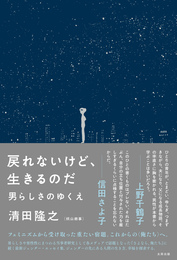
We can't go back, but we will live.
Information will be available after you log in. Please create an account.
Rights Information
Other Special Conditions
Abstract
It is a story of a young man's growth into a husband and a father, as he stumbles, wavers, and stumbles. The frankness of the story is heartbreaking. Men can learn a lot from this book. ─ ─Ueno Chizuko
His writing is unwavering. This is probably because he never forgets to check him position and the power he has been given too strictly. ─ ─ Sayoko Nobuta
The heavy homework I received from feminism. To “Oretachi” from now on.
This is the latest collection of gender essays following “Sayonara, Oretachi” which became a hot topic in various media as a study of masculinity and masculinities. It explores human life and happiness beyond gender.
The value of life, the richness of life, is probably determined by how much something has moved you. Gender is a matter directly related to the way we live and the way we are, and it functions as an operating system (OS) for our words, actions, and sensitivities. If we try to make changes to it, of course, various parts of it will squeak at the edges. The stress and discomfort are not insignificant, and it is no wonder that reactionary energy is generated. That is why I think. We can't change just by thinking with our heads. To do so, it is important to have a series of experiences in which we are overwhelmed by something, lost for words, and left in a state of lethargy. Of course, it's not just books and dramas. There are emotions in love, parenting, work, travel, life, tea with friends, and so on. I am sure that everyone feels that “the old days were better,” “times have become very suffocating,” and “I wish I could go back to those days,” but time has moved on and things have changed, and there is no way to undo what has changed. Still, every day goes on, and we can continue to live our lives with our hearts shaking with something. We can't go back to the time we said goodbye to, but we will continue to live in this time when the crisis of masculinity is being called for.
(We can't go back, but we will live.)
1 “Men” and Feminism: Outside the Sisterhood
2 I am middle aged man: The male-dominated society and the responsibility of the middle-aged generation
3 Victim, perpetrator, shame, and hurt: Embracing the crying “me”
4 Far from the Heisei era: The curse of productivity and self-responsibility
5 Resisting patriarchy: The curse of marriage, family, and gender
6 The future To “Oretachi” in the future──Affirmation of being
Author’s Information
Born in 1980 in Tokyo. Writer and representative of “Momoyama Shoji”. Graduated from Waseda University, Faculty of Letters I. Writes on gender, love, relationships, culture, and other topics for various media. He is also a respondent for the Asahi Shinbun newspaper “be”'s life counseling program "A Crucible of Worries. His books as Momoyama Shoji include “Love Counseling for Surviving” and “All About Love Other Than Being Motivated or Loved” (both published by East Press), and “Sayonara, Oretachi” (Stand Books) and “Neither Bragging nor Valorizing: What I Saw in the Stories of ”Ordinary Men“ That Are Neither Bragging nor Valorizing but are Life and Manliness” (Fusosha) and “Oshibari kara kara shite no jendā nyumon” (Asahi Press).
He is also a coauthor with Yukiko Tomiyama of “How to Walk in the First Year of College” (Shueisha Bunko), and a co-editor with Tomomi Shibuya of “Why Men are the Way They Are” (Chikuma Shobo), etc. He also delivers podcast programs “Momoyama Shoji” and “Otoko no Kosodatei Yomoyama Nanashi”.
| Series/Label | --- |
|---|---|
| Released Date | Dec 2024 |
| Price | ¥1,900 |
| Size | 127mm×188mm |
| Total Page Number | 304 pages |
| Color Page Number | --- |
| ISBN | 9784778319960 |
| Genre | Nonfiction / Humanities > Essay |
| Visualization experience | NO |