





Nikkei Business Publications, Inc. Bookmark
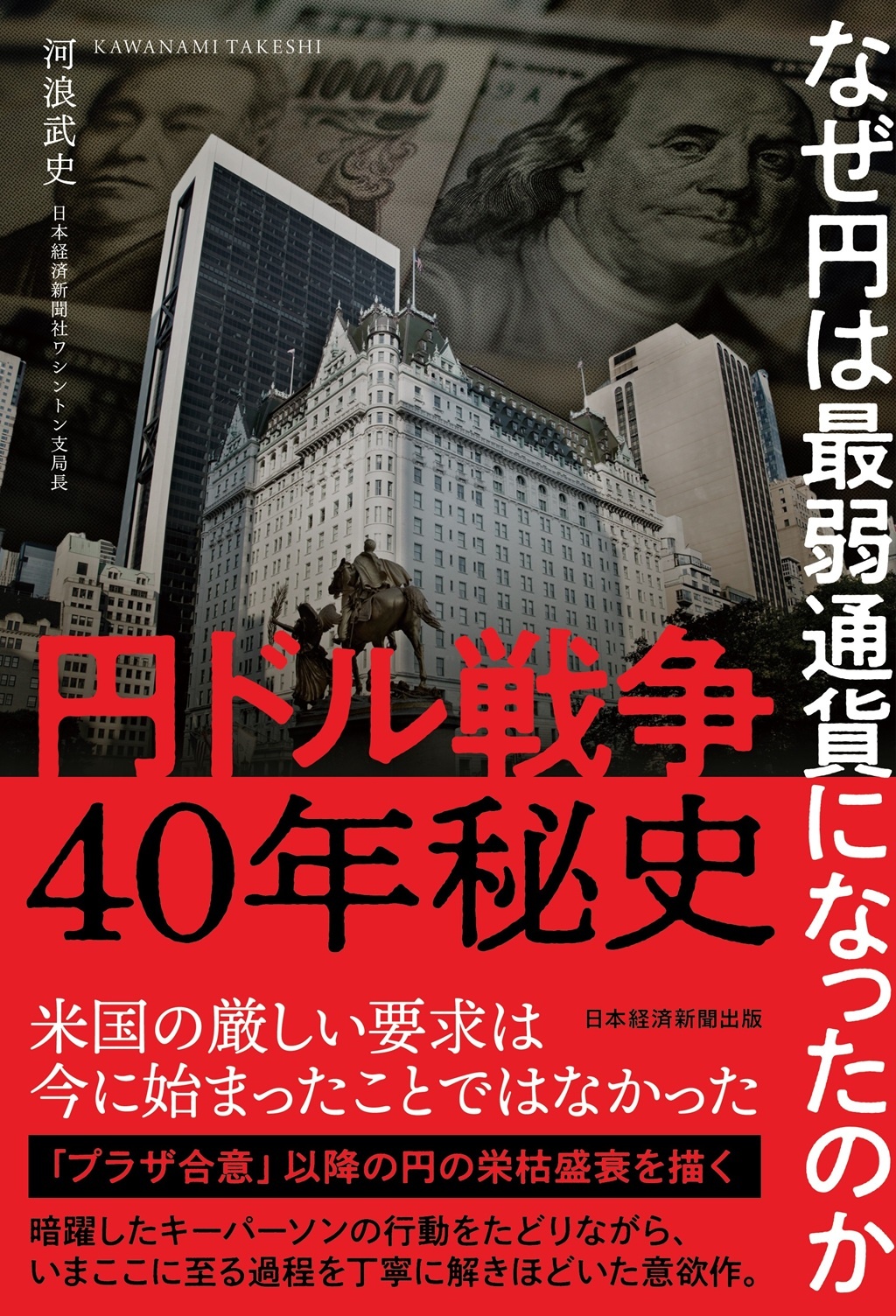
The Secret History of the Yen-Dollar War: 40 Years Why Did the Yen Become the Weakest Currency?
Information will be available after you log in. Please create an account.
Rights Information
Other Special Conditions
Abstract
● The rise and fall of currencies reflects the rise and fall of national power.
Forty years ago, in 1985, the G5 and the Plaza Accord were signed in New York. This historic policy of weakening the dollar was essentially a rescue of the United States by Japan, the economic superpower. It was exactly 40 years after Japan's defeat in World War II. It was also a moment of great ecstasy, as Japan finally rose to become a leading player in the global economy.
However, it proved to be a fleeting dream. The policy of weakening the dollar led to Japan's bubble economy and its subsequent collapse, leading to a long period of stagnation. By 2024, the yen fell to 161 yen per dollar. In real terms, this was the lowest point in half a century since the floating exchange rate system was established.
The rise and fall of currencies reflects the rise and fall of national power. What went wrong over the past 40 years as the Japanese economy recovered from the rubble? In 2011, an unprecedented rise in the yen hit Japan, still suffering from the effects of the earthquake and tsunami. Japan bet on a major economic experiment: quantitative and qualitative monetary easing.
Meanwhile, China, South Korea, and Taiwan are outwitting Japan by inducing weaker currencies. The Trump administration is exploring a "second Plaza Accord," but when will it materialize?
Who is to blame for the currency mismanagement? Is there a way to revive it? We examine the global battle over the yen.
Author’s Information
Nihon Keizai Shimbun Washington Bureau Chief
Joined Nihon Keizai Shimbun in 1995. Has extensive experience covering the Bank of Japan, the Ministry of Finance, financial institutions, and other institutions. For six years from 2015, he served as a Washington correspondent, covering the first Trump administration and the Federal Reserve Board (FRB). He is well-versed in the behind-the-scenes aspects of domestic and international policy decisions. From 2021 to 2025, he served as Director of the Financial Services Department, overseeing coverage of monetary policy and financial business. He has held his current position since April 2013. His solo works include "Mizuho: 20 Years of Wandering" and "The Bank of Japan: Reality and Illusion."
| Series/Label | --- |
|---|---|
| Released Date | Oct 2025 |
| Price | ¥2,200 |
| Size | 127mm×188mm |
| Total Page Number | 360 pages |
| Color Page Number | --- |
| ISBN | 9784296124756 |
| Genre | Business > Politics/Economics/Law |
| Visualization experience | NO |